


12 Platforms to Help Solopreneurs Get More Done Without Burning Out
Running a business solo means you’re the CEO, accountant, marketer, and customer service rep all rolled into one. It’s a lot. The good news is you don’t have to do everything manually or hire a full team to stay productive. The right platforms can handle repetitive tasks, organize your chaos, and free up hours in your week. This list focuses on tools that actually make a difference for solopreneurs who need to work smarter, not harder. Each platform here solves a specific problem so you can focus on what matters most: growing your business and keeping your sanity intact.
- Legiit

Finding reliable help as a solopreneur can feel like searching for a needle in a haystack. Legiit connects you with freelancers who specialize in services that solopreneurs actually need, like content writing, SEO, graphic design, and social media management. The platform focuses on digital marketing services, which means you’re not wading through thousands of unrelated gigs to find what you need.
What sets Legiit apart is its straightforward approach. You can browse pre-packaged services with clear pricing, or post a project and let freelancers come to you. Many sellers offer services specifically designed for small business owners and solopreneurs, so you’re not paying for enterprise-level packages you don’t need. It’s a practical way to outsource tasks that drain your time without committing to long-term contracts or hefty retainers.
- Notion
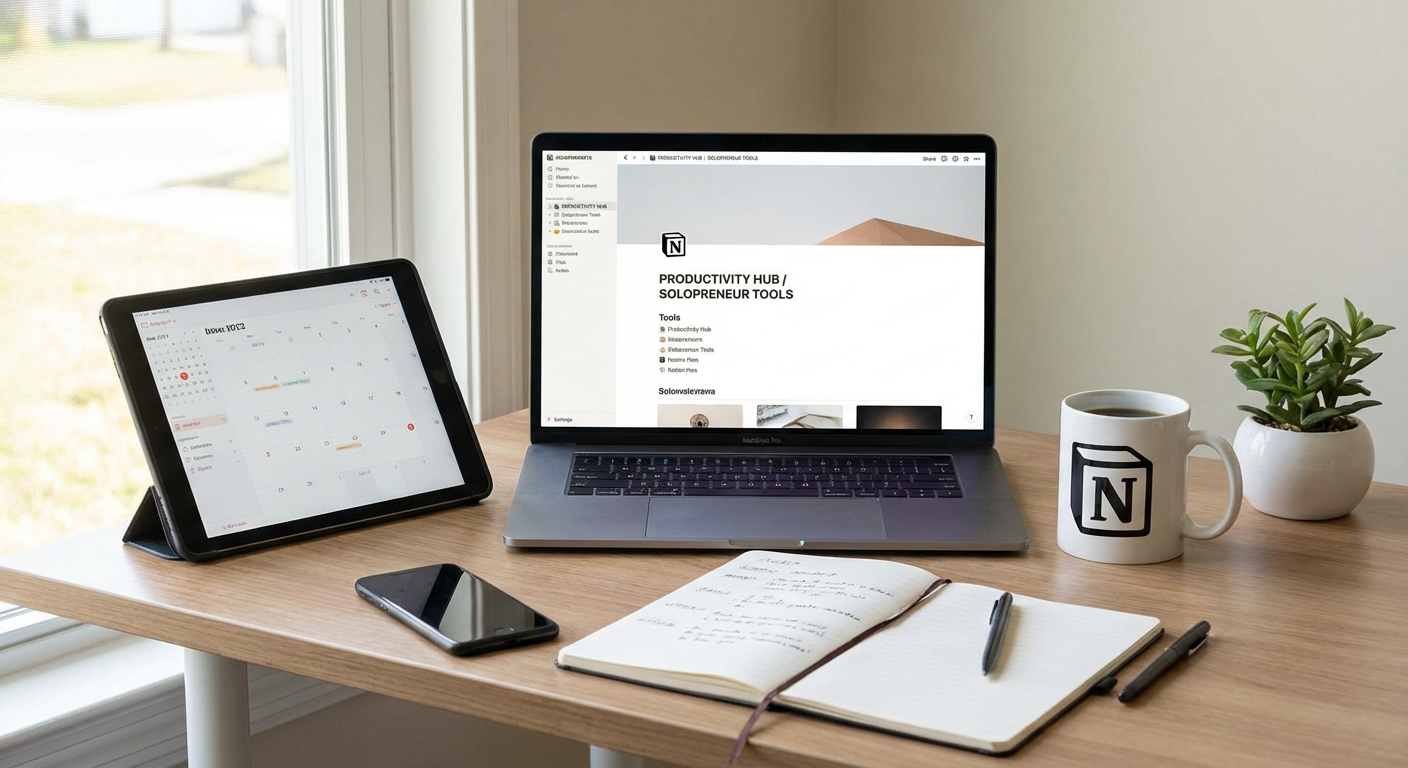
Notion is the Swiss Army knife of productivity tools. It combines notes, databases, task lists, and wikis into one flexible workspace. You can build a content calendar, track projects, store research, and document processes all in the same place. The learning curve exists, but once you get the hang of it, you can customize Notion to fit exactly how your brain works.
For solopreneurs, Notion eliminates the need to jump between five different apps. You can create templates for recurring tasks, build a client database, or keep a running list of business ideas. The free plan is generous enough for most solo operations, and everything syncs across devices so you can capture ideas wherever you are.
- Calendly
The back-and-forth of scheduling meetings is a time vampire. Calendly solves this by letting people book time with you based on your actual availability. You set your working hours, buffer times, and meeting types, then share a link. The other person picks a slot that works for them, and it automatically adds to both calendars.
This platform is especially helpful if you do client consultations, coaching calls, or sales meetings. It integrates with Google Calendar, Outlook, and other calendar apps, and you can set up automated reminders so people actually show up. The free version covers the basics, and the paid tiers add features like multiple meeting types and team scheduling if you ever expand.
- Zapier
Zapier connects your apps so they can talk to each other without you playing middleman. It automates repetitive tasks by creating workflows called Zaps. For example, you can automatically save email attachments to cloud storage, add new customers to your email list, or post social media updates across multiple platforms at once.
The beauty of Zapier is that it works with thousands of apps, so you can connect the tools you already use. You don’t need coding skills to set up automations. The interface walks you through each step, and there are templates for common workflows. Even a handful of simple Zaps can save you hours each week on tasks that don’t require your direct attention.
- Wave
Bookkeeping is nobody’s favorite task, but ignoring it creates bigger headaches down the road. Wave offers free accounting software designed for small businesses and solopreneurs. You can track income and expenses, send invoices, scan receipts, and generate financial reports without paying monthly fees.
The platform makes invoicing particularly painless. You can create professional-looking invoices in minutes, send them directly to clients, and even accept credit card payments for a small transaction fee. Wave also connects to your bank account to automatically import transactions, which cuts down on manual data entry. Come tax time, you’ll have organized records instead of a shoebox full of receipts.
- Grammarly
Clear communication builds trust with clients and customers. Grammarly checks your writing for grammar mistakes, awkward phrasing, and tone issues in real time. It works across email, social media, documents, and basically anywhere you type online.
For solopreneurs who handle their own content, client emails, and marketing copy, Grammarly acts like a second pair of eyes. The free version catches most errors and suggests improvements. The premium version adds style suggestions, plagiarism detection, and tone adjustments. It won’t replace a human editor for important content, but it significantly reduces embarrassing mistakes in everyday communication.
- Canva
Professional design used to require expensive software and years of training. Canva makes it possible to create decent graphics without either. The platform offers templates for social media posts, presentations, flyers, logos, and just about any visual content you might need.
You can drag and drop elements, change colors to match your brand, and resize designs for different platforms with a few clicks. Canva’s free library includes thousands of images, icons, and fonts. The learning curve is minimal, and you can produce graphics that don’t scream “I made this myself in five minutes” even if you actually did. For solopreneurs on a tight budget, it’s a practical alternative to hiring a designer for every little thing.
- Loom
Sometimes a quick video explanation beats typing out a long email. Loom lets you record your screen, camera, or both, then instantly share the video with a link. It’s faster than scheduling a call and clearer than written instructions.
Solopreneurs use Loom for client updates, tutorial videos, bug reports, feedback, and training documentation. You can record a walkthrough in minutes, and the recipient can watch on their own time. Loom automatically transcribes your videos and lets viewers leave comments at specific timestamps. The free plan includes up to 25 videos, which is plenty for occasional use. It’s a simple tool that dramatically improves communication efficiency.
- Airtable
Airtable sits somewhere between a spreadsheet and a database. It looks familiar enough if you’ve used Excel or Google Sheets, but it’s far more flexible. You can track projects, manage inventory, organize content ideas, or build a CRM without wrestling with complicated formulas.
The platform shines when you need to view information in different ways. You can switch between grid view, calendar view, kanban boards, and galleries depending on what you’re working on. Airtable also supports attachments, checkboxes, linked records, and automation. It takes a bit of setup time, but once your bases are configured, they become powerful tools for managing complex information without the complexity of traditional database software.
- Mailchimp
Email marketing remains one of the most effective ways to stay connected with customers. Mailchimp makes it accessible for solopreneurs who don’t have marketing teams. You can build email lists, design newsletters, automate welcome sequences, and track who’s opening and clicking.
The free tier supports up to 500 contacts and 1,000 sends per month, which works for businesses just starting out. The drag-and-drop email builder requires no coding, and there are templates for announcements, promotions, and updates. Mailchimp also offers basic landing pages and signup forms, so you can grow your list without needing separate tools. As your business grows, the platform scales with you.
- Toggl Track
You can’t improve what you don’t measure. Toggl Track is a simple time tracking tool that shows you exactly where your hours go. You can track time with one click, categorize it by project or client, and generate reports that reveal your actual productivity patterns.
For solopreneurs who bill by the hour, accurate time tracking is essential for getting paid fairly. Even if you don’t charge hourly, tracking your time helps you identify tasks that eat up more hours than they’re worth. You might discover you’re spending three hours a week on admin work that could be automated or outsourced. Toggl’s free plan covers one user with basic features, and the interface is clean enough that tracking doesn’t become another chore.
- Slack
Even solopreneurs need to communicate with clients, contractors, and collaborators. Slack organizes conversations into channels so different projects don’t get jumbled together in one endless email thread. You can share files, search past conversations, and integrate with other tools you use.
The free version includes 90 days of message history and ten integrations, which covers most solo needs. You can create separate channels for different clients or projects, use direct messages for quick questions, and set your status to manage availability. Slack reduces email clutter and keeps communication more organized than text messages or scattered email chains. It’s particularly useful if you work with the same people regularly and need a central place for ongoing conversations.
The right platforms won’t magically give you more hours in the day, but they will help you use the hours you have more effectively. Each tool on this list solves a specific problem that solopreneurs face regularly: scattered information, repetitive tasks, communication bottlenecks, or skills you don’t have time to learn. Start with one or two platforms that address your biggest pain points rather than trying to implement everything at once. As you get comfortable, you can add more tools and even connect them to work together. The goal isn’t to use the most apps but to build a simple system that supports your work instead of complicating it. You’ve got enough on your plate already.