


7 Types of User-Generated Content Compared: Which Drives the Most Sales?
User-generated content has become one of the most powerful tools for online businesses. But not all types of UGC perform equally when it comes to actually driving sales. Some formats build trust faster, others convert browsers into buyers more effectively, and a few offer better ROI than you might expect. This list compares seven different types of user-generated content, weighing their strengths and weaknesses so you can decide which ones deserve your attention and budget.
- Platform-Sourced Expert Content Versus In-House Creation

Legiit offers a middle ground between fully organic user content and expensive agency work. When you commission content from verified freelancers on the platform, you get the authenticity of real user voices with more control over messaging than random customer posts.
The trade-off here is cost versus spontaneity. Platform-sourced content costs money upfront, but you avoid the unpredictability of waiting for customers to create content on their own. You also get higher quality and consistency compared to hoping someone posts a good review. The downside is it lacks the pure organic feel of unsolicited testimonials, though most audiences cannot tell the difference if the creator genuinely uses and likes your product.
This approach works especially well for businesses just starting out or those in niches where customers do not naturally share content online. You get the credibility boost of third-party voices without gambling on whether your audience will participate.
- Customer Reviews Versus Video Testimonials
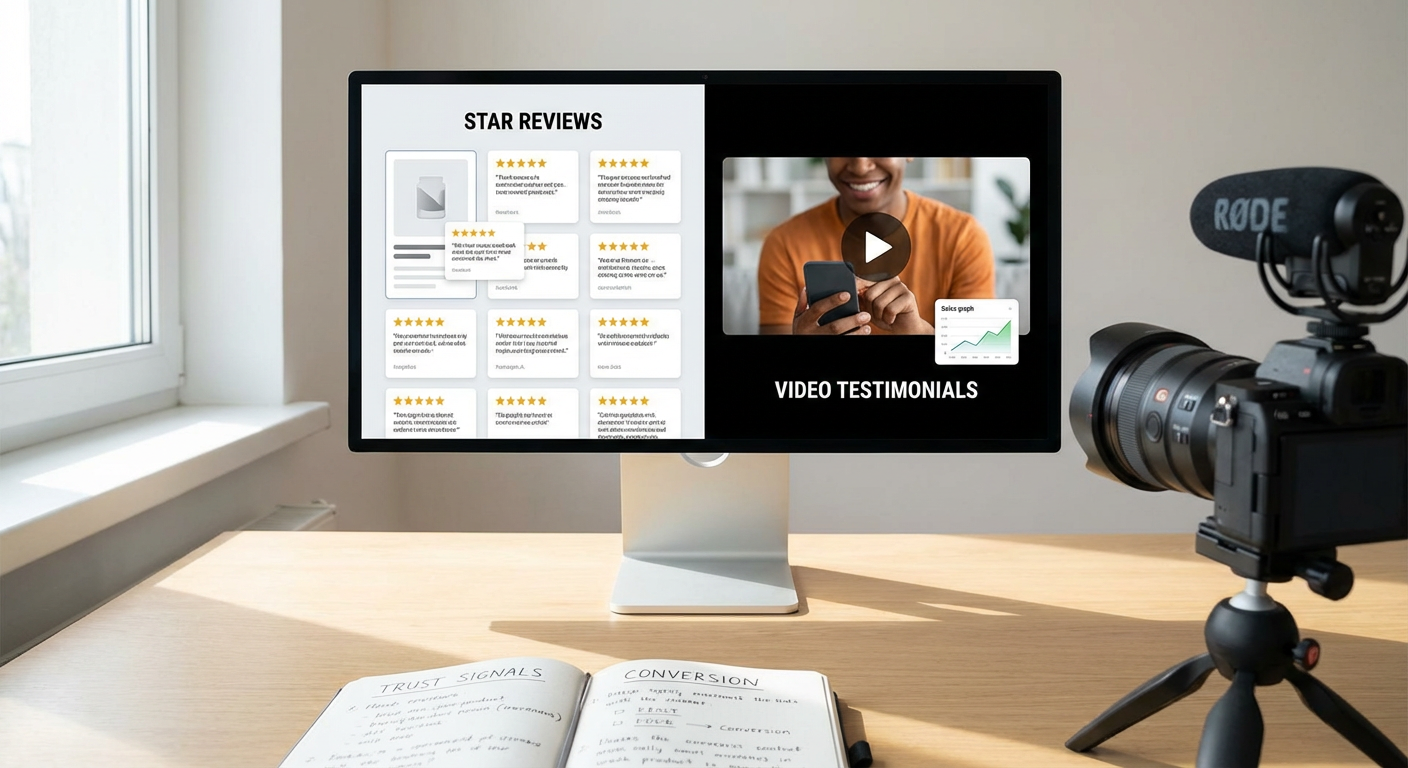
Written reviews are easy to collect and display, which explains why nearly every ecommerce site uses them. They build trust through volume and let shoppers scan quickly for specific information about sizing, quality, or performance. The main weakness is that text reviews are easy to fake, and shoppers have grown somewhat skeptical of them.
Video testimonials, on the other hand, feel more authentic and harder to fabricate. Seeing a real person talk about your product creates emotional connection that text cannot match. The conversion rates for pages with video testimonials typically beat those with only written reviews. But video comes with significant downsides. Most customers will not make videos, so you get far fewer submissions. Production quality varies wildly, and bad lighting or audio can hurt your brand more than help it.
For products with complex benefits or emotional appeal, video testimonials win despite the hassle. For straightforward purchases where shoppers want quick verification, written reviews in high volume do the job better.
- Social Media Posts Versus Dedicated Review Platforms
When customers share your product on Instagram, TikTok, or Facebook, you get the benefit of their personal networks seeing your brand. These posts feel natural because they live in feeds alongside personal updates. They often include lifestyle context that makes your product look appealing in real-world situations. The challenge is that you have limited control over these posts, and they disappear quickly in fast-moving social feeds.
Dedicated review platforms like Trustpilot or Google Reviews offer permanence and searchability. People actively looking to evaluate your brand will find these reviews, and they carry weight because users expect honest feedback on these sites. However, they lack the visual appeal and social proof of seeing a product in someone’s actual life. They also tend to attract more negative reviews since people visit these platforms specifically to complain.
Social media posts work best for reaching new audiences and building brand awareness. Review platforms matter more for closing sales with people already considering a purchase. The smart approach uses both, but if you have to prioritize, consider where your target customers actually look before buying.
- Photo Submissions Versus Written Testimonials
Customer photos show your product in action without requiring the production effort of video. People trust photos because they reveal the truth that marketing images might hide. A real customer photo of a dress shows how it actually fits. A snapshot of furniture in someone’s home shows true color and scale. Photos also work across language barriers and communicate faster than text.
Written testimonials allow customers to explain complex benefits and tell stories that create emotional connection. They give you quotable material for other marketing and let customers address specific objections or use cases. The weakness is that written testimonials require more effort from customers, and many people struggle to articulate their thoughts clearly.
For visual products like clothing, home goods, or food, photos deliver more sales impact. For services, software, or products with intangible benefits, written testimonials explain value that photos cannot capture. Many brands ask for both, but that reduces participation rates since customers view it as too much work.
- Influencer Content Versus Regular Customer Content
Influencer-created content reaches large audiences quickly and often has high production value. Even micro-influencers bring thousands of engaged followers who trust their recommendations. The content looks professional and fits smoothly into marketing campaigns. But audiences increasingly recognize sponsored content and discount it accordingly. The authenticity factor drops significantly when someone is clearly being paid.
Regular customer content lacks polish and reach, but it makes up for those weaknesses with genuine enthusiasm. When someone posts about your product without compensation, their followers notice. The recommendation carries more weight. The problem is you cannot control when or if it happens, and you get far less of it.
Influencer content works well for awareness and introducing products to new audiences. Regular customer content converts better among people who are already considering a purchase because it feels more trustworthy. The cost difference is substantial too. Influencers charge rates that small businesses often cannot afford, while regular customer content costs nothing but encouragement.
- Q&A Responses Versus Star Ratings
Question and answer sections let potential customers see real product information from people who already own the item. These sections address specific concerns that product descriptions might miss. Someone asks if a laptop bag fits a 16-inch screen, and an owner confirms it does. This targeted information removes obstacles to purchase effectively. The downside is that Q&A sections require critical mass to be useful. Without enough participants, questions go unanswered and the section looks inactive.
Star ratings provide instant visual feedback that shoppers can process in seconds. A 4.5-star average with hundreds of reviews signals quality immediately. Ratings also aggregate easily, letting you display social proof prominently. But stars alone tell shoppers nothing about why people rated something that way. A three-star rating might mean the product is mediocre, or it might mean it is excellent but runs small and some people ordered the wrong size.
For complex products or considered purchases, Q&A content helps more because shoppers need detailed information. For impulse buys or straightforward items, star ratings provide enough social proof without requiring shoppers to read extensively. Combining both gives you the benefits of quick credibility signals plus detailed information for serious buyers.
- Before-and-After Content Versus Everyday Use Content
Before-and-after posts create dramatic proof of product effectiveness. They work particularly well for fitness products, skincare, home improvement, and anything that promises visible transformation. The visual contrast makes the benefit undeniable and gives potential customers a clear picture of what they might achieve. The limitation is that before-and-after content only suits certain product categories. It also requires customers to document their starting point, which many people forget to do.
Everyday use content shows your product integrated into normal life. Someone photographs your coffee mug on their desk, your planner during their morning routine, or your backpack on a hiking trip. This content builds aspiration by showing how your product fits into desirable lifestyles. It feels less salesy than before-and-after posts. The weakness is that everyday content often looks mundane and fails to highlight specific product benefits clearly.
Before-and-after content drives sales for products where results matter most. Everyday content works better for lifestyle products where belonging and identity drive purchases. Consider what motivates your specific customers. If they want proof of effectiveness, push for before-and-after submissions. If they want to see themselves as part of a community or lifestyle, everyday content resonates more powerfully.
Each type of user-generated content brings different strengths to your sales strategy. Written reviews build trust through volume. Video testimonials create emotional connection. Social posts reach new audiences while review platforms catch people ready to buy. The best approach depends on your product, audience, and resources. Start by testing one or two types that match your strengths, measure what actually drives conversions, and expand from there. The goal is not collecting every possible type of content but focusing on what moves your specific customers from interested to purchased.